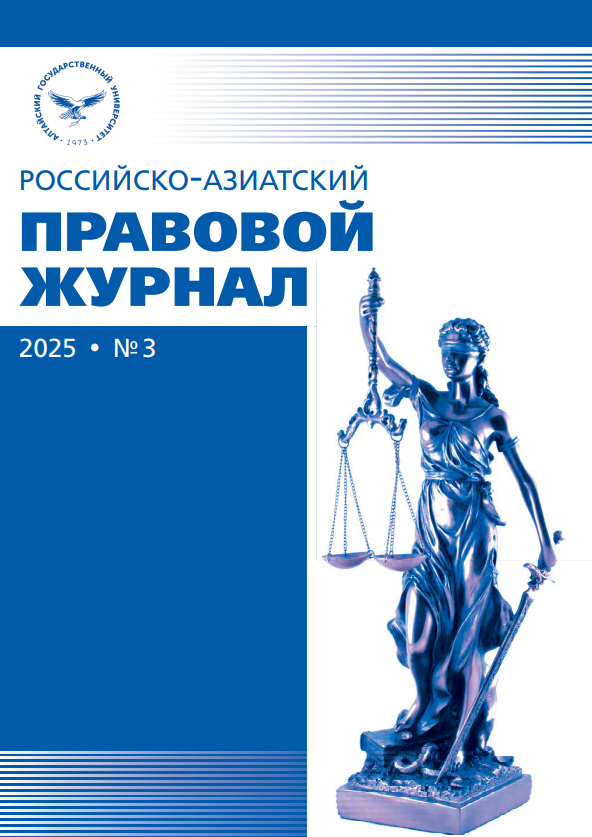
THE LEGAL CULTURE OF ENGINEERING AND TECHNICAL WORKERS AS A FACTOR IN ENSURING RUSSIA'S TECHNOLOGICAL SOVEREIGNTY
УДК 34:008 ББК 67.05

Abstract
The article considers legal culture as a necessary condition for the formation of technological sovereigntyof the state. The concept of legal culture is clarified, the levels of legal culture of an engineering and technicalemployee are determined, and deformations of legal behavior caused by a low level of legal culture and posinga risk to the technological sovereignty of the country are identified. An analysis of the system of regulationsfor additional education has been carried out, and an extensive list of requirements for the legal culture ofan engineering and technical employee of an aircraft maintenance organization has been determined. Theauthor concludes that legal culture is essential as a factor in the sustainable development of the individual,society and the state.
Downloads
References
2. Гурьев В.В., Затонский В.А. Правовая культура как элемент правовой жизни и критерий ее качества / В.В. Гурьев, В.А. Затонский // Правовая культура. 2021. №1 (44). С. 30–37.
3. Богатова Е.В. Правовая культура: статика и динамика понимания / Е.В. Богатова // Философия права. 2017. №4 (83). С. 30–34.
4. Малько А.В. Правовая жизнь в современной России: основные тенденции развития / А.В. Малько // Правовая политика и правовая жизнь. 2017. №2. С. 8–16.
5. Бабенко А.Н. Взаимодействие ценностей и норм в процессе становления правовой системы /А.Н. Бабенко // Вестник ЮУрГУ. Серия: Право. 2015. №3. С. 7–11.
6. Жинкин С.А., Кашлакова А.С., Иваненко А.В. О реализации правового воздействия на личность в ракурсе особенностей развития российской правовой культуры / С.А. Жинкин, А.С. Кашлакова, А.В. Иваненко // Правовая культура. 2022. №1 (48). С. 7–16.
7. Напалкова И.Г. Культура законотворчества как важнейший компонент правовой культуры общества / И.Г. Напалкова // Правовая культура. 2020. №4 (43). С. 23–35.
8. Петручак Л.А. Правовая культура как детерминанта современного российского общества /Л.А. Петручак. М. : Юриспруденция, 2012. 396 с.
9. Дудченко Л.В. Правовая культура общества и правовая ментальность личности / Л.В. Дудченко // Ученые записки Орловского государственного университета. Серия: Гуманитарные и социальные науки. 2015. №5 (68). С. 339–342.
10. Шумкин Е.М. Правовая культура как фактор легитимности социального и правового порядка / Е.М. Шумкин // Вестник Пермского университета. Философия. Психология. Социология. 2021.№3. С. 466–477.
11. Балакин А.В. Правовой нигилизм в современной России / А.В. Балакин // Молодой ученый.2018. №6 (192). С. 122–123.
12. Терещенко В.А. Особенности правового нигилизма современной российской молодежи /В.А. Терещенко, И.Г. Ратникова // Мир науки, культуры, образования. 2018. №3 (70). С. 384–386.
13. Голубихина Н.В. Дисфункции процесса социализации как фактор деформации правовой культуры и правового сознания / Н.В. Голубихина // Гуманитарные, социально-экономические и общественные науки. 2020. №12 (1). С. 13–16.
14. Пономаренко А.В. Критерии воспитанности нравственно-правовой культуры личности юриста / А.В. Пономаренко // Проблемы права в современной России: сборник статей межвузовской научно-практической конференции с международным участием, Санкт-Петербург, 22 апреля 2016 г.СПб. : Санкт-Петербургский политехнический университет Петра Великого, 2016. С. 182–186.
Copyright (c) 2025 В. С. Гришин

This work is licensed under a Creative Commons Attribution 4.0 International License.
Russian-Asian Law Journal is a golden publisher, as we allow self-archiving, but most importantly we are fully transparent about your rights.
Authors may present and discuss their findings ahead of publication: at scientific conferences, on preprint servers, in public databases, and in blogs, wikis, tweets, and other informal communication channels.
Russian-Asian Law Journal allows authors to deposit manuscripts (currently under review or those for intended submission) in non-commercial, pre-print servers such as ArXiv.
Authors who publish with this journal agree to the following terms:
- Authors retain copyright and grant the journal right of first publication with the work simultaneously licensed under a Creative Commons Attribution License that allows others to share the work with an acknowledgement of the work's authorship and initial publication in this journal.
- Authors are able to enter into separate, additional contractual arrangements for the non-exclusive distribution of the journal's published version of the work (e.g., post it to an institutional repository or publish it in a book), with an acknowledgement of its initial publication in this journal.
- Authors are permitted and encouraged to post their work online (e.g., in institutional repositories or on their website) prior to and during the submission process, as it can lead to productive exchanges, as well as earlier and greater citation of published work (See The Effect of Open Access).